The Holy Mud of New Mexico: A Journey to El Santuario de Chimayó
Nestled in the foothills of the Sangre de Cristo Mountains, about 30 miles north of Santa Fe, lies a small adobe church that holds a massive place in the spiritual heart of the American Southwest. El Santuario de Chimayó is not just a National Historic Landmark; it is often called the "Lourdes of America."

Every year, especially during Holy Week, tens of thousands of pilgrims make their way to this quiet valley. Some walk for miles, some carry heavy wooden crosses, and almost all come seeking the same thing: a small handful of "Tierra Bendita"—holy dirt.

The Legend of the Black Christ
The story of the Santuario begins with a mysterious light. According to local tradition, on the night of Good Friday in 1810, a local friar named Don Bernardo Abeyta saw a light beaming from a hillside near the Santa Cruz River.
When he investigated, he discovered a crucifix buried in the earth. This wasn't just any crucifix; it was the Our Lord of Esquipulas, a "Black Christ" originally associated with a shrine in Guatemala. Legend says that although the crucifix was moved to a nearby church multiple times, it miraculously disappeared each night, only to reappear in the hole where Abeyta first found it. Taking this as a divine sign, a small chapel was eventually built over the spot in 1816.

The Architecture: A Living Piece of History
The Santuario is a masterpiece of Spanish Colonial architecture. Built with thick adobe walls and topped by two bell towers, the structure feels like it grew directly out of the New Mexican soil.

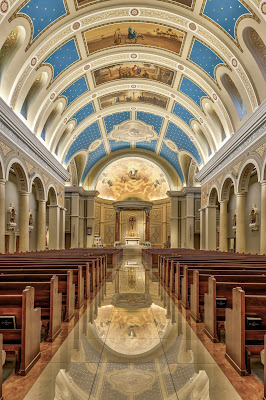
Inside, the atmosphere shifts instantly. The air is cool, smelling of beeswax and ancient wood. The interior is a vibrant gallery of Santero art—traditional New Mexican religious art. You’ll find colorful retablos (paintings on wood) and bultos (carved statues) depicting various saints. The altar screen, or reredos, is one of the most significant examples of folk art in the United States, painted with vivid pigments that have survived two centuries of prayer and incense.

El Pocito: The Room of Miracles
While the main altar is beautiful, the true destination for most visitors is a small, low-ceilinged room to the side of the altar called El Pocito (the little well).
In the center of the floor is a small, circular pit filled with dry, sandy earth. This is the Tierra Bendita. Pilgrims kneel by the pit, rubbing the dirt on their skin or scooping a small amount into containers to take home to sick loved ones.
"It isn't just about the dirt; it's about the faith brought to the dirt." — A common local sentiment.
Adjoining the room of the pit is a hallway that serves as a powerful, albeit heavy, testament to the shrine's reputation for healing. The walls are lined with discarded crutches, braces, and canes, left behind by those who claim to have been cured after visiting the Santuario. Mixed among them are "milagros" (small metal charms), photographs of soldiers, and handwritten notes of gratitude, creating a tapestry of human hope and suffering.

The Pilgrimage: A Walk of Faith
The Santuario is active year-round, but it truly comes alive during Semana Santa (Holy Week). On Good Friday, as many as 30,000 people descend upon the village of Chimayó.
For many New Mexicans, the pilgrimage (or peregrinaje) is a multi-day journey. Some walk from Santa Fe, others from as far as Albuquerque (nearly 90 miles away). The sight of pilgrims walking along the shoulders of High Road to Taos, silhouetted against the high-desert sunset, is one of the most iconic and moving images of the region.
The Traditions of Chimayó
Beyond the spiritual, Chimayó is a village of deep cultural roots. After visiting the Santuario, many travelers stop at the nearby weaving shops. The Ortega and Trujillo families have been weaving in this valley for nine generations, creating intricate wool blankets and rugs that are world-renowned.

And then, there is the food. Chimayó is famous for its heirloom Chimayó Chile. This specific pepper has a distinct, smoky sweetness that can’t be replicated elsewhere. Many believe the unique flavor comes from the same "holy" soil that draws pilgrims to the church.


Comments
Post a Comment